I work with board directors, senior executives, and MBA and PhD students. My teaching centers on corporate governance, CEO succession, and how leaders decide under pressure, alone and in groups. I keep returning to the decision environment — the norms and structures that surround a choice — because leaders build it whether they intend to or not.
I also teach the methods behind the evidence. Decision makers are handed statistical analysis constantly but are often ill-equipped to evaluate it. A good part of my work is giving leaders the conceptual frameworks and statistical grounding to tell a solid finding from a fragile one, and to know the questions to ask before acting.
Some of this comes from outside the classroom. I am a licensed pilot, and an instrument failure in the clouds some years ago taught me more about prepared judgment than any case ever has. Well-prepared leaders move fast and decisively in a crisis because much of the hard work happened earlier, not in the moment itself.
Sessions and programs
The Board’s Role in CEO Succession and Performance Oversight
The board’s most important job is making sure the right CEO is in place, positioned to succeed, monitored well, and replaced when necessary. That work begins long before a succession event and continues well past the appointment. Drawing on recent research on CEO succession and CEO impact, this session examines how succession planning both reduces risk and creates constraints, why CEO performance resists evaluation in real time, and what board routines help directors hold those tensions.
Understanding and Overcoming Leadership Blind Spots
What you can see as a leader is shaped by what you have lived. Your education, your career path, the environments you have moved through, the ideas you absorbed along the way. That foundation informs your judgment and it also limits it. In this session you surface your own blind spots, examine how they shape your thinking, and build strategies for narrowing them.
Strategy as a Creative Process
Most strategy processes produce variation rather than novelty. The problem is rarely a lack of analysis. It is that leaders work from a narrow repertoire of associations and settle on familiar patterns too quickly. This session treats strategy as a creative discipline and borrows from how original work gets made in art, music, writing, and design: deep repertoires, unexpected combinations, productive constraints, and experimentation before commitment.
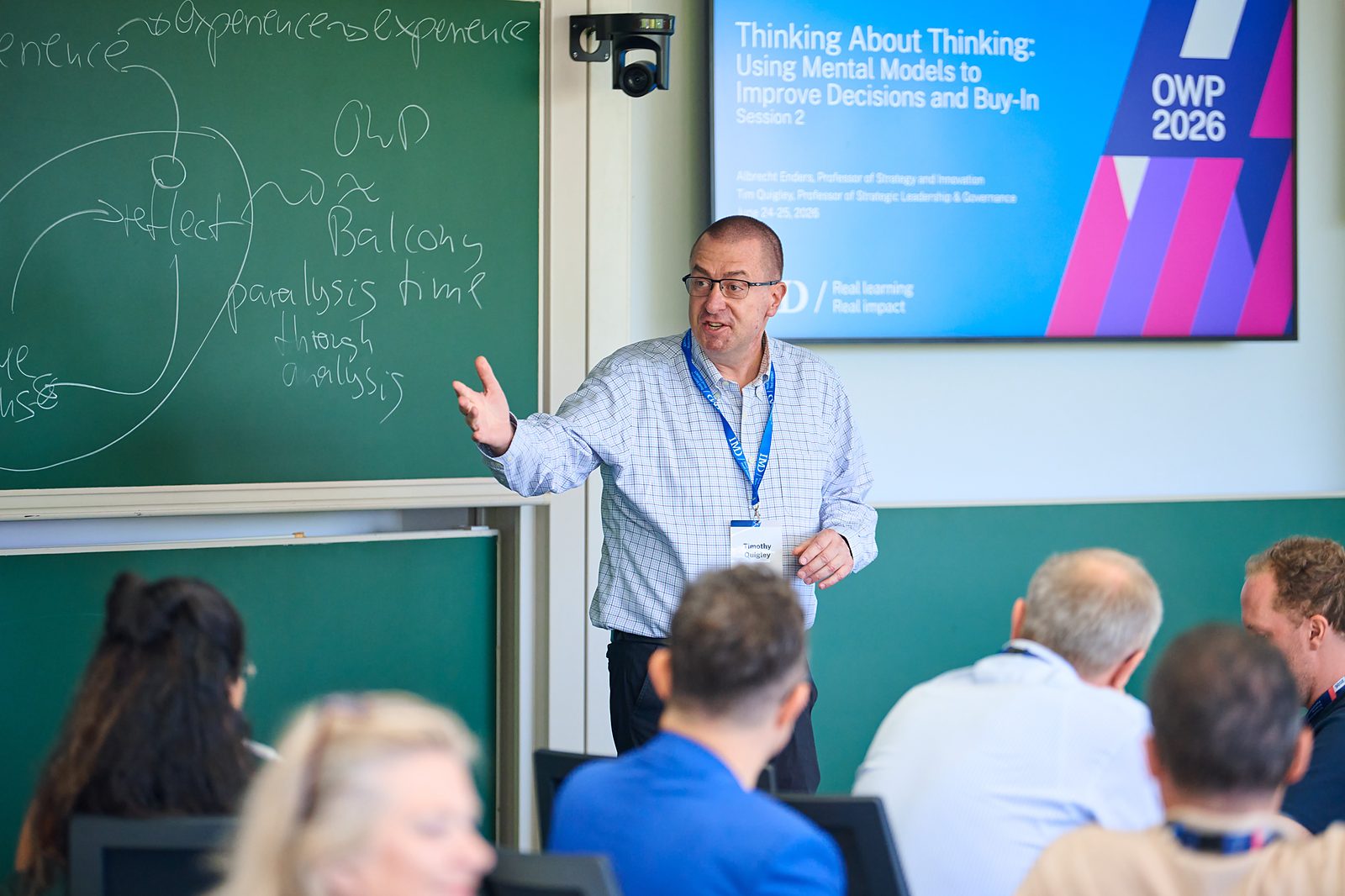
Thinking About Thinking: Using Mental Models to Improve Decisions and Buy-In
A co-taught session in Orchestrating Winning Performance on mental models and how they filter what leaders notice, what they decide, and what they miss.
Why Smart Leaders Make Bad Decisions
A four-session MBA elective on cognitive blind spots, anchored by an in-flight instrument failure and a simulation in which participants run competing firms while carrying strategic convictions they did not choose for themselves.


You must be logged in to post a comment.